Phi Ta Khon: The Ghost Festival of Dan Sai That Nobody Talks About
Every June, the small town of Dan Sai in Loei Province transforms into something that feels part carnival, part spiritual ceremony, and part fever dream. Locals don elaborate ghost masks carved from coconut palm fronds, paint their faces in otherworldly colors, and dance through the streets in what might be Thailand's most visually striking festival that almost nobody outside of Isan has heard of. This is Phi Ta Khon, and it deserves your attention.
If you've been living in Thailand for years and this is your first time hearing about it, you're not alone. While millions flock to Songkran and Loy Krathong, Phi Ta Khon remains delightfully under the international radar despite being one of the most photographically spectacular cultural events in Southeast Asia.
What Phi Ta Khon Actually Is
Phi Ta Khon translates roughly to "ghosts following people," which gives you some idea of what you're walking into. The festival combines Buddhist merit-making with animist traditions that predate Buddhism's arrival in Thailand by centuries. Participants dress as spirits of the dead, but rather than being scary, these ghosts are playful, mischievous, and surprisingly welcoming to visitors.
The festival always falls on different dates each year because it's tied to the lunar calendar, typically happening in late June or early July. The exact dates are determined by the local spiritual medium, Jao Por Guan, after consulting with the spirits. You can't plan a year ahead for this one.
The celebration lasts three days, though the ghost parade on the first day gets most of the attention. Day two focuses on Buddhist sermons and merit-making at Wat Phon Chai, while day three concludes with rocket firing ceremonies meant to encourage rainfall for the rice planting season.
The Masks That Make the Festival
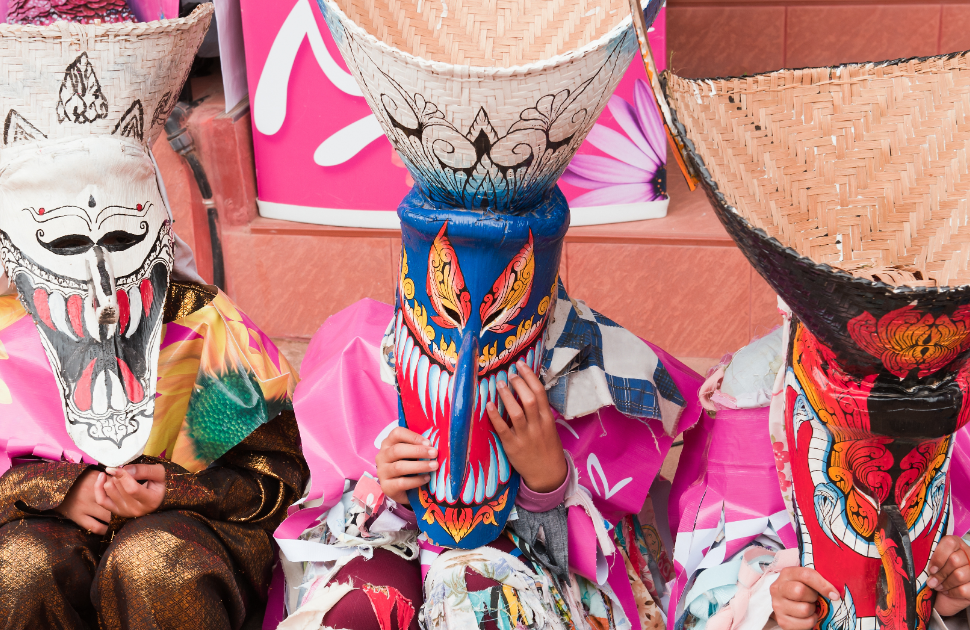
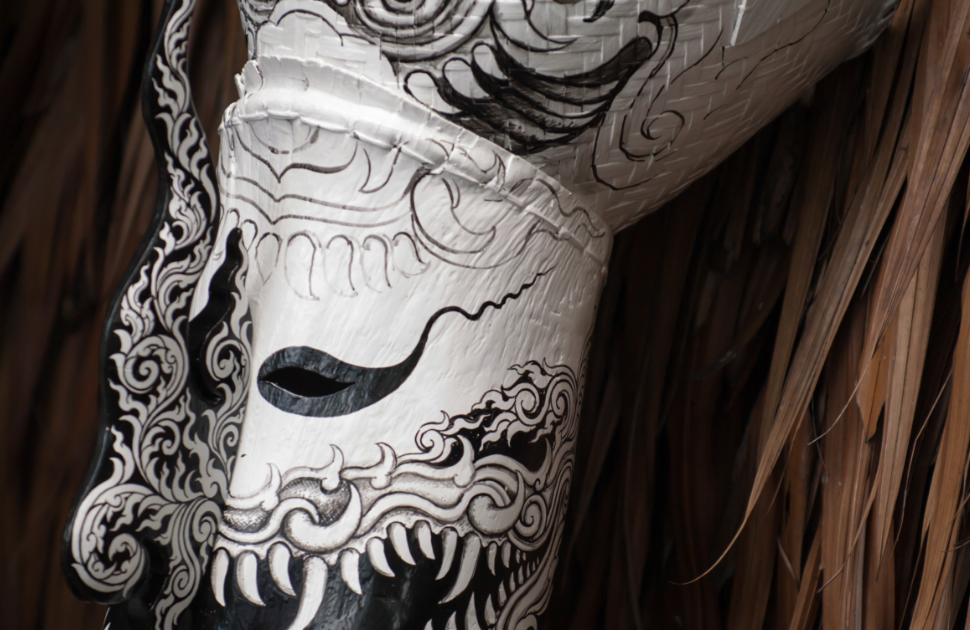
The heart of Phi Ta Khon lies in its masks, and these aren't mass-produced souvenirs. Each mask is hand-carved from the bark of coconut trees, painted in bold reds, whites, and blues, and decorated with everything from bottle caps to old CDs that catch the light as dancers move through the streets.
Traditional masks feature exaggerated features: bulging eyes, gaping mouths full of oversized teeth, and long pointed noses. But contemporary mask makers have started incorporating modern elements. I've seen Phi Ta Khon masks that reference popular culture, political figures, and even COVID-19 themes from recent festivals.
The costume extends beyond just the mask. Participants wear colorful patchwork clothing, often made from scraps and old fabrics, and carry wooden phalluses called palad khik. These aren't meant to be offensive but represent fertility and good fortune in traditional Isan culture.
Why Dan Sai, and Why Now
Dan Sai sits near the Mekong River in Loei Province, about six hours north of Bangkok by car. The town has a population of around 15,000 people, swelling to perhaps triple that during Phi Ta Khon. The festival's origins trace back several centuries to a Buddhist Jataka tale about Prince Vessandorn's return from exile, though the ghost elements clearly draw from much older animist practices.
The timing coincides with the rice planting season, when communities traditionally came together for collective agricultural work. The festival serves as both spiritual preparation for the farming season and a rare opportunity for young people to interact across family lines in what was historically a quite conservative rural society.
Local belief holds that the spirits of ancestors return during Phi Ta Khon to dance with the living before the hard work of rice cultivation begins. The playful, sometimes sexually suggestive nature of the festivities serves as a temporary inversion of normal social rules.
What You'll Actually Experience
The main parade begins early Saturday morning at Wat Phon Chai temple and winds through Dan Sai's small downtown area. Masked dancers move in loose groups, approaching spectators to pose for photos, engage in playful banter, and sometimes chase children who shriek with delighted terror.
The atmosphere is remarkably inclusive for visitors. Unlike some Thai festivals where foreigners feel like obvious outsiders, Phi Ta Khon participants actively engage with anyone present. Bring a camera, but also be prepared to become part of the show.
Food stalls line the parade route selling northeastern specialties: som tam, larb, sticky rice, and grilled fish caught from the nearby Mekong. The local specialty during the festival is khao tom mud, sweet sticky rice cooked in bamboo tubes that vendors sell for about 20 baht each.
Accommodation fills up months in advance, but you can easily visit as a day trip from Loei city, about 45 minutes away by songthaew. The journey costs around 50 baht each way.
Getting There and Practical Details
Flying to Loei Airport from Bangkok takes about 90 minutes and costs 3,000 to 4,500 baht depending on when you book. Nok Air runs daily flights. From Loei airport, rent a car or arrange a taxi to Dan Sai for about 800 baht.
Alternatively, take an overnight bus from Bangkok's Mo Chit terminal to Loei for around 400 baht, then catch a local songthaew to Dan Sai. The bus journey takes about eight hours but runs regularly.
Since festival dates change each year, check with the Tourism Authority of Thailand or Dan Sai's municipal office for exact dates. The festival typically runs Friday through Sunday, with Saturday being the main ghost parade day.
Bring cash, comfortable walking shoes, and a hat. Dan Sai in June hits 35°C regularly, and you'll be standing in direct sunlight for hours. Most vendors don't accept cards, and the nearest ATM might run out of cash during peak festival times.
Why This Matters Beyond the Spectacle
Phi Ta Khon represents something increasingly rare in modern Thailand: a genuinely local festival that exists primarily for the community that created it, not for tourist revenue. The commercialization that has transformed Songkran and Loy Krathong hasn't reached Dan Sai yet, partly because of its remote location and partly because the festival's spiritual significance remains central to local identity.
This authenticity makes Phi Ta Khon both more rewarding to experience and more fragile than Thailand's better-known celebrations. The festival depends on oral traditions, family knowledge of mask-making techniques, and community participation that urbanization threatens to erode.
Young people from Dan Sai increasingly move to Bangkok and other cities for work, returning only occasionally. The festival serves as a powerful pull back to rural roots, but whether it can maintain its character as Thailand modernizes remains an open question.
For visitors, Phi Ta Khon offers something most Thai cultural experiences don't: the chance to witness living tradition that hasn't been packaged for international consumption. It's strange, beautiful, and utterly unique. Just don't expect it to stay a secret much longer.