Khao Yai: The National Park That Every Bangkok Expat Needs to Visit
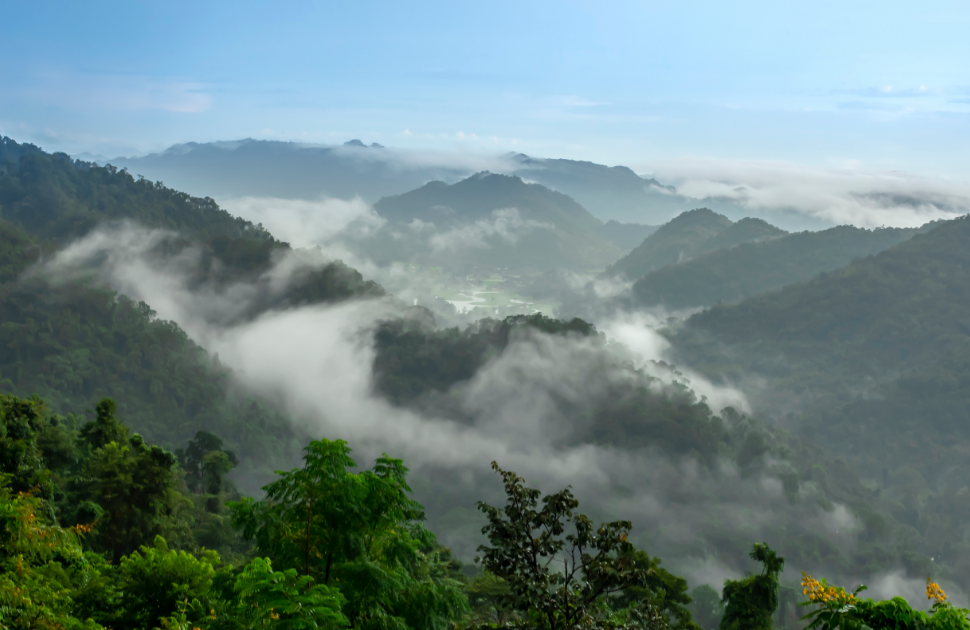
When Bangkok expats talk about the moment they understood why people choose to live in Thailand, they often describe a morning in Khao Yai. Not a temple. Not a beach. A rainforest, 2.5 hours from the apartment, at 6am, watching a herd of wild elephants cross a road at walking speed while a great hornbill crosses overhead.
Khao Yai National Park is Thailand's oldest national park, established in 1962, and part of the Dong Phayayen-Khao Yai Forest Complex, a UNESCO World Heritage Site since 2005. The complex covers around 6,155 square kilometres across five provinces and contains one of the largest intact monsoon forests in Asia.
The Wildlife
Wild Asian elephants (Elephas maximus) live in the park in a population estimated at 250 to 300 individuals. Sightings are frequent on the main road through the park (Highway 3077) between the park gates, particularly at dawn and dusk. Do not stop in the middle of the road for photographs. Pull over completely, turn off your engine, and wait. Observe from inside your vehicle. Keep a minimum distance.
Gibbons announce the dawn with extraordinary noise. The Lar gibbon (Hylobates lar) populations in Khao Yai are among the most visible in any Thai park. Follow the sound and look up into the canopy.
Gaur (Bos gaurus), the largest extant wild cattle species, are regularly seen grazing at the roadside. Sambar deer, barking deer, and wild boar are common. The park has documented leopard, sun bear, and Asian black bear populations; sightings are rare but real.
Getting There
A car is necessary. Khao Yai does not have practical public transport links for visitors wanting to explore the park itself. Options are rental car from Bangkok (the drive takes approximately 2 to 2.5 hours from the city centre via Highway 1 and then Route 2090) or a private day tour, which typically costs 1,500 to 2,500 baht per person including transport and a guide.
If you drive independently, the main entrance is at Km 17 on Route 3077 in Nakhon Ratchasima province. Entrance fees are 400 baht for foreign adults and 200 baht for children. The park opens at 6am and vehicle access to the interior closes at 8pm.
What to Do
Sunrise wildlife drive: Drive slowly along Highway 3077 from the entrance to Haew Narok waterfall from 6am. This two-hour window produces the highest probability of elephant sightings. Bring binoculars.
Haew Narok Waterfall is the park's most dramatic waterfall, an 80-metre drop into a pool at the base of a jungle gorge. The trail from the car park is approximately 1 kilometre. The viewing platform offers the best perspectives. The waterfall runs year-round but is at its most powerful from July to November.
Haew Narok night tour: Licensed guides offer evening wildlife spotlighting drives from the park's accommodation area. These trips, running from 7pm to 10pm, target nocturnal animals including civets, porcupines, and owls. Book in advance through the park's accommodation or through licensed tour operators outside the park at the Khao Yai township.
Pha Kluai Mai campsite within the park has basic camping facilities and bungalows. Accommodation books up quickly on weekends; reserve through the Department of National Parks website.
Staying Outside the Park
The town of Pak Chong, 25 kilometres from the park entrance, is the main base. PB Valley Winery (technically Khao Yai Winery, Thailand's most established wine producer) is nearby and open for tours and tastings. The Khao Yai Art Museum in the town is worth an hour. Numerous hotels and resorts surround the park perimeter ranging from budget to the luxury Kirimaya resort, which has direct wildlife sighting access from its grounds.
What to Bring
Light layers for early mornings (the temperature inside the forest can be surprisingly cool), insect repellent, binoculars, and a telephoto lens if you are serious about wildlife photography. The park road is surfaced throughout; no off-road capability is needed.