Bangkok Motorbike Taxis: How They Work and When to Use Them
Whether you've just landed in Bangkok for the first time or you've been here three years and still haven't figured out why some motorcycle drivers wear orange vests while others wear red, this guide will demystify one of the city's most essential transport systems. After reading this, you'll know exactly which vest colour to look for, how much to pay, and when a motorbike taxi will save you 20 minutes compared to any other option.
The reality is simple: motorbike taxis in Bangkok operate on a zone system that makes perfect sense once you understand it, but appears completely random if you don't. Here's everything you need to know to use them confidently.
What Are Bangkok Motorbike Taxis and How Do They Work
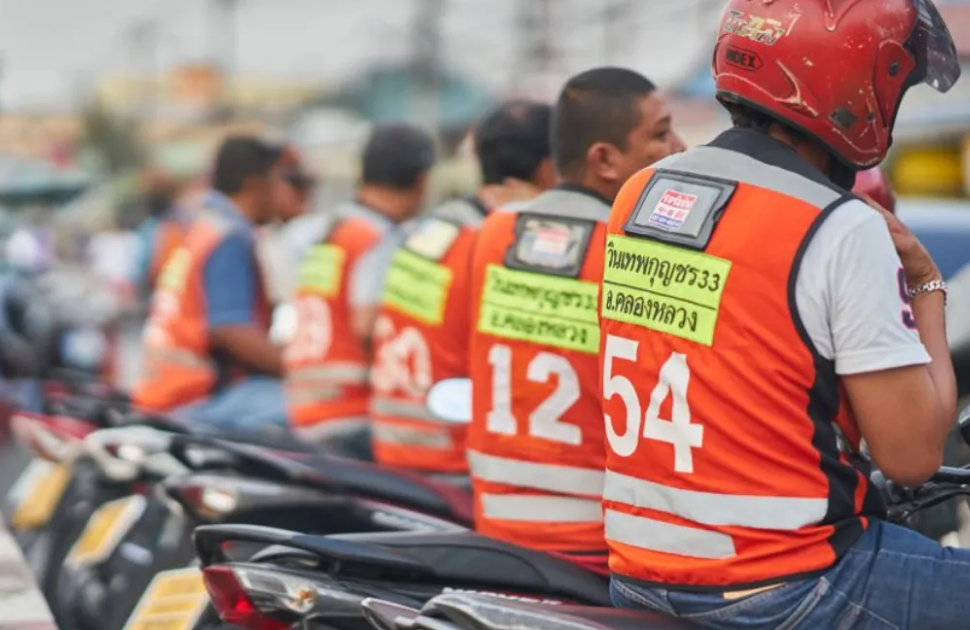
Bangkok motorbike taxis are licensed motorcycle drivers who wear numbered vests and operate from designated spots throughout the city. Think of them as a cross between a taxi and a bus route: they have fixed starting points like bus stops, but they'll take you anywhere within their operational zone like a taxi.
There are approximately 100,000 registered motorbike taxi drivers in Bangkok, making them one of the largest transport networks in the city. Each driver belongs to a specific group that controls a particular area, usually a few blocks around a BTS station, major intersection, or shopping center.
The system works because Bangkok's traffic moves in predictable patterns. While a car might take 25 minutes to travel two kilometers during rush hour, a motorbike can weave through stopped traffic and complete the same journey in eight minutes. This isn't just convenience, it's often necessity: the gap between BTS stations and your final destination can involve a 15-minute walk in 35-degree heat or a five-minute motorbike ride.
Understanding the Vest Color System
The vest colors indicate which group each driver belongs to, not the type of service they provide. Orange vests dominate central Bangkok, particularly around Sukhumvit and Silom areas. Red vests are common in older parts of the city like Chinatown and the areas around Khao San Road. Green, blue, and yellow vests appear in specific neighborhoods, usually determined by which group established control of that area first.
What matters more than the color is the number on the vest. This identifies the individual driver within their group and serves as accountability: if you have problems with a ride, you can report the specific number to the group leader who manages that area.
Each vest color group operates independently. An orange-vest driver from Phrom Phong BTS cannot pick up passengers from a red-vest area near Hualamphong Station. This territorial system prevents conflicts between groups but can be confusing for newcomers who expect a unified service.
Where to Find Motorbike Taxis
Motorbike taxi stands are located at virtually every BTS and MRT station exit, major intersections, shopping centers, and office buildings. Look for clusters of motorcycles with drivers wearing identical colored vests, usually gathered under shade or near a small shop.
The most reliable spots are BTS station exits. Every station has at least two motorbike taxi groups: one near the main exit serving the busiest direction, and smaller groups near secondary exits. Asok BTS has five different groups covering different zones radiating out from the station.
If you're staying in a hotel or serviced apartment, there's likely a motorbike taxi stand within 100 meters. Ask the reception staff to point you toward the nearest group, they'll know exactly where to send you.
Shopping centers like Terminal 21, MBK, and Siam Paragon have designated motorbike taxi pickup points, usually near the main entrance or in the parking area. These are particularly useful because the drivers know all the major hotels and attractions in the area.
How Much Motorbike Taxis Cost
Standard fares range from 20 baht for very short distances (one to two blocks) up to 60 baht for longer rides within the same zone. Cross-zone rides or trips during heavy rain can cost 80 to 100 baht, but anything above 100 baht within central Bangkok means you should negotiate or find a different driver.
The fare structure isn't random. Short hops from BTS stations to nearby office buildings or hotels typically cost 20 to 30 baht. Medium distances that would take 15 minutes to walk cost 40 to 50 baht. Longer rides that cross multiple major roads or involve significant traffic navigation cost 60 baht or more.
Rush hour pricing applies from 7:30 to 9:30 AM and 5:30 to 7:30 PM, when fares increase by 10 to 20 baht depending on the distance. Rain surcharges are standard: light rain adds 10 baht, heavy rain adds 20 baht or more. This isn't opportunistic pricing, it reflects the genuine additional difficulty and time required during these conditions.
Payment is always in cash, always after the ride. Most drivers don't carry much change, so bringing 20, 50, and 100 baht notes makes transactions smoother. Tipping isn't expected but rounding up from 45 to 50 baht is common and appreciated.
When Motorbike Taxis Make Sense
Motorbike taxis excel in three specific situations: covering the last kilometer from public transport to your destination, navigating heavy traffic when you're running late, and reaching locations that are awkward for cars to access.
The "last kilometer" problem is real in Bangkok. You can take the BTS to within 500 meters of your destination, then face a choice between a 15-minute walk in tropical heat or a three-minute motorbike ride. During Bangkok's hot season (March to May), when afternoon temperatures exceed 35 degrees, this isn't just comfort but practical necessity.
During rush hour, motorbike taxis move at completely different speeds than cars. A journey from Phrom Phong BTS to a hotel on Sukhumvit Soi 24 takes 15 minutes by taxi during evening traffic, but five minutes by motorbike. If you're meeting someone for dinner and running late, this difference matters enormously.
Narrow sois present another clear advantage. Many of Bangkok's best restaurants, bars, and shops are located down alleys too narrow or congested for cars to navigate comfortably. Motorbike taxis eliminate the problem of walking long distances down unfamiliar sois, particularly at night.
Safety and What to Expect
Motorbike taxis in Bangkok are statistically safer than most visitors expect, but common sense precautions matter. Always wear the helmet the driver provides, keep bags secure across your body rather than hanging loose, and avoid motorbike taxis during heavy rain when road surfaces become unpredictable.
The drivers are experienced professionals who navigate Bangkok traffic daily. They understand which lanes move fastest, which intersections to avoid, and how to position themselves safely among cars and buses. Most accidents involving motorbike taxis happen when passengers shift their weight unexpectedly or when bags get caught in wheels.
Sit toward the back of the seat, hold onto the designated grab rails or the driver's vest (never their shoulders), and keep your feet away from the exhaust pipe and rear wheel. If you're carrying a backpack, wear it on your front during the ride to prevent it from throwing off your balance.
Female passengers wearing skirts should sit sidesaddle, which is completely normal and expected. Most drivers will automatically assume this unless you indicate otherwise.
The Cultural Context You Should Know
Motorbike taxi drivers occupy a specific place in Bangkok's social and economic ecosystem. Most are from rural provinces who came to Bangkok for work opportunities. The job requires significant upfront investment: purchasing or renting a motorcycle, buying safety equipment, and paying group membership fees.
The territorial system exists to ensure fair income distribution among drivers and prevent conflicts. It also means that drivers develop deep knowledge of their specific areas: they know which buildings have security restrictions, which restaurants offer good delivery commissions, and which routes avoid the worst traffic at specific times.
Many drivers work 10 to 12 hour shifts, six days a week. The relationship between drivers and regular passengers often becomes semi-personal: if you live or work in an area and use motorbike taxis regularly, you'll start recognizing individual drivers who remember your usual destinations and preferences.
Understanding this context helps explain why the service works as efficiently as it does, and why treating drivers with basic courtesy and respect makes every interaction smoother.
Bangkok motorbike taxis make sense once you understand their logic: they're a zone-based transport system designed to solve specific problems that cars and public transport can't address. Use them for short distances, traffic-heavy situations, and narrow soi access. Pay fair prices, wear the helmet, and hold on properly. The system works because it's evolved to serve real needs in a practical way.